
Blog
Surf Etiquette: The Rules That Keep Everyone Safe
Surfing is dangerous, and one of the biggest risks in the water is other people.
That is exactly why surf etiquette exists. It is there to keep everyone safer, reduce collisions, and help make sure everyone has a good time.
The thing to remember is that accidents happen. In the surf, situations develop quickly, and it can be hard to understand exactly what is happening in every moment. Even with the best intentions, people make mistakes.
So if someone does not follow the rules perfectly and you have to miss a wave or take avoiding action, try to let it go. At some point, you will probably have your own deer-in-the-headlights moment too.
These rules are not about being perfect. They are about doing your best to keep yourself and others safe.
Rule 1: Always avoid collisions
This rule overrides every other rule in the water.
Even if you technically have priority, that does not give you the right to crash into someone. If avoiding a collision means pulling out, straightening out, or missing the wave, do it.
No wave is worth injuring yourself or someone else.
Rule 2: Don’t drop in
The highest point on the wave is called the peak. This is usually the best take-off zone.
The surfer closest to the peak has priority. Likewise, if someone is paddling from further out and is already committed to the wave, they have priority too.
Do not take off in front of them or cut across their line.
Rule 3: Don’t snake
A queue naturally forms around the take-off zone.
If other surfers were there before you, wait your turn. Do not paddle around people at the last second to make it look like you have priority when the wave arrives.
That is called snaking, and it is one of the fastest ways to frustrate everyone around you.
Rule 4: Don’t hog all the waves
You get one go.
If you miss the wave, fall off, or paddle for a wave that someone else catches, go back to the end of the line-up. Take a moment to assess what went wrong, then try again on your next turn.
Sharing waves fairly keeps the session flowing and gives everyone a chance.
Rule 5: Don’t paddle through the surfing line
After you fall off, you have two options for getting back out:
If you have surfed far enough away, paddle wide and go around the shoulder of the wave. This is often the easiest and preferred option.
If you are still in the way of other surfers, you must paddle into the white water and take it on the head rather than cutting across the face of the wave.
Paddling through the line of someone riding a wave puts both of you at risk.
Rule 6: Be kind
Do not shout at people. Do not try to police the whole line-up.
Yes, etiquette matters. But so does perspective. Mistakes happen, especially with beginners or in busy conditions.
Stay calm, give people space, and remember that one day you will be the person who gets it wrong too.
Rule 7: Don’t throw your board
Throwing your board is dangerous.
A loose board can hit another surfer, even if they seem far away. Always hold onto your board if you can. If you cannot, do everything you can to control it and protect others around you.
Your board is your responsibility.
Final thoughts
Good surf etiquette is not about acting like the toughest or most experienced person in the water. It is about awareness, patience, and respect.
If everyone follows these rules as best they can, the surf becomes safer, less stressful, and a lot more enjoyable for everyone.
How to Assess Surf Conditions (S.W.O.T Method)
A simple framework to read the ocean before you paddle out
If you’ve ever shown up to the beach unsure whether it’s a good day to surf — you’re not alone.
Reading surf conditions can feel overwhelming at first. Forecasts, wind, tides… it’s a lot.
That’s why we use a simple framework at Dawn Surf Co:
S.W.O.T — Surf, Wind, Obstacles, Tide
Once you understand these four elements, you’ll be able to quickly decide whether it’s a good day to paddle out — especially along the Torquay and Anglesea coastline.
S — Surf (Height & Period)
This is the foundation. How big are the waves, and how powerful are they?
Wave Height
There are two ways wave height is described:
Back of the wave (surfer scale)
Face height (what you see standing on the beach)
The face is typically about twice the height of the back.
So:
A 3ft wave (back) = roughly 6ft face
Beginner guideline:
Stick to 3ft or smaller (back height) conditions.
Wave Period
Period is the time between waves (in seconds).
Under 8 seconds → weak, messy surf
8–10 seconds → average
10+ seconds → clean, powerful, organised waves
As a rule, 10+ seconds is what you’re looking for
Side Note: Multiple Swells
Storms out at sea generate waves. When there are multiple storms, you can get:
Secondary and tertiary swells
Waves coming from different directions
Uneven timing between sets
This creates:
“Double ups” (waves combining into bigger ones)
Harder-to-read conditions
⚠️ These conditions are typically not beginner-friendly
W — Wind (Speed & Direction)
Wind is often the difference between perfect waves and a messy ocean.
Ideal Wind Conditions
No wind (glassy)
Light offshore wind (blowing from land out to sea)
These create smooth, clean, well-shaped waves. These typically occur earlier mornings.
Wind Speed
Below 20 km/h → generally manageable
Stronger winds → choppy, broken waves
Wind Direction (Surf Coast)
Along the Torquay–Anglesea coastline:
✅ Northerly winds = ideal (offshore)
❌ South-westerly winds = worst (onshore)
Onshore wind:
Pushes waves over early
Creates lots of whitewater
Makes conditions harder to surf
O — Obstacles (What’s Around You)
Rips (Currents Moving Out to Sea)
Rips are one of the most important things to understand as a surfer.
They are currents of water moving away from shore, and while they can feel intimidating, they’re actually very predictable once you know what to look for.
How to Identify a Rip
Look for:
Darker water → deeper channel
Surface ripples → water moving outward
Less whitewater → waves aren’t breaking there
In simple terms:
If waves are breaking either side, but not in one section — that’s likely a rip.How to Know If You’re in One
You’re paddling but not getting closer to shore
You’re standing, then suddenly in deeper water
You feel yourself being gently pulled out the back
How to Get Out of a Rip
Don’t fight it by paddling straight to shore.
Instead:
Paddle parallel to the beach
Head towards the whitewater (breaking waves)
The waves will help push you back in
How to Avoid Them
Before entering the water, scan the beach
Once you’re in position:
Pick a landmark on shore (tree, building, car)
Keep checking your position
Paddle to stay in place
Awareness is your best defence
2. Crowd
More people = fewer waves
Mixed abilities = higher risk
Look for quieter areas where you have space to learn.
Beginner Guide
Stick to beginner-friendly beaches when starting out.
More advanced spots often require:
Better ocean awareness
Stronger paddling ability
Understanding of surf etiquette
Localism
Every surf spot has its own community.
Show respect by:
Picking up your rubbish
Giving others space in the water
Following basic surf etiquette
Parking considerately (don’t block access, driveways, or take up more space than needed)
A little respect goes a long way and it makes the experience better for everyone.
3. Ocean Floor
Sand (Beach Breaks)
These are more beginner friendly as it is easier to walk around and doesn’t require as much paddling.
Softer underfoot
Can create flash rips due to shifting sandbanks
Reefs & Point Breaks
These are for more advanced surfers, confident paddlers and have a good awareness of the conditions, etiquette and risks.
More consistent waves
Defined take-off and paddle zones
Harder surface → requires confidence
4. Wildlife Awareness
Look for signs of fish activity:
Birds diving into the water
Fishermen nearby
Activity near piers or rocks
These can attract larger marine life.
Sharks in Victoria are very uncommon, but awareness is always important.
T — Tide (Timing is Everything)
Tide changes how waves break and how the ocean moves.
Low Tide
Shallower water
Waves tend to be more powerful and defined
Often better shape
Currents are typically weaker
High Tide
Deeper water
Waves are slower and softer
Can help if waves are closing out too quickly
Local Insight (Torquay & Anglesea)
Most local spots around Torquay and Angelsea typically work best on Mid to low tide. Every beach is different, your local surf shop will happily help you out.
Important to Know
Tide times shift by ~45 minutes each day
Tidal range changes throughout the year
Larger tidal swings often occur around seasonal transitions
Forecast Tools
I personally like to use a combination of Surfline and Swellnet:
Surfline
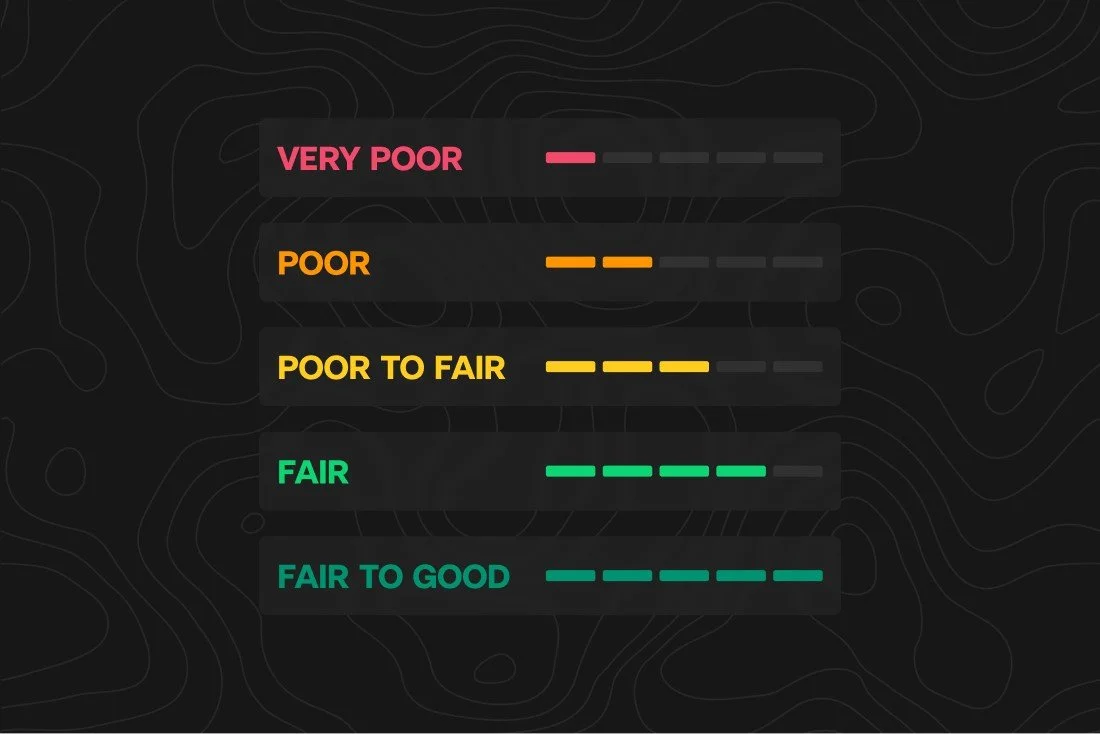
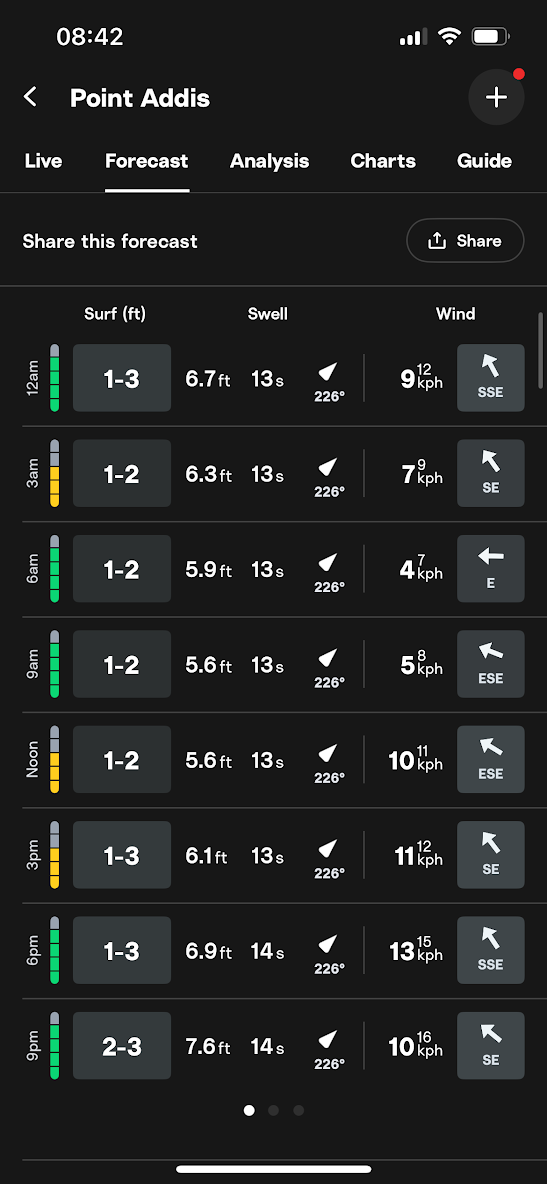
Surfline has a simple rating system, which I find easy to understand, it means you don’t need to be a meteorologist to know when it’s good to surf.
Premium gives you access to the long range (16 day forecast) but this can frequently change. Forecasts are typically only reliable within about 3 days.
Swellnet
Great for local surf cams
Lets you check real conditions before leaving home
Final Takeaway
If you’re ever unsure, come back to this:
Good surf = Clean waves + Light offshore wind + Safe environment + Right tide
Or simply:
S + W + O + T = A good session
Want help reading the conditions in real time?
At Dawn Surf Co., we choose locations each day based on exactly this framework — so you don’t have to.
If you’re just getting started, we’ll guide you through it in the water so you can build confidence faster.
How Fit Do You Need To Be To Learn to Surf as an Adult?
A Realistic Guide for First-Time Adult Surfers on the Surf Coast
If you’re thinking about taking your first surf lesson as an adult, one of the biggest questions you might be wrestling with is:
“Am I fit enough to learn to surf?”
It’s an extremely common concern — and one of the biggest blockers that stops adults from ever giving surfing a try. Many people picture surfers as ultra-fit athletes gliding effortlessly across the waves. The truth is very different, especially when it comes to adult beginners learning in a safe, structured environment.
At Dawn Surf Co., we teach adults of all ages, abilities, and fitness levels on the Surf Coast — from Torquay to Anglesea, Point Addis to Urquharts Bluff. And time and time again, we see the same thing:
You do not need to be fit to learn to surf.
Not even close.
In fact, your first lesson is designed so you can go entirely at your own pace — without pressure, without expectations, and without needing to be in peak physical shape.
Here’s exactly how fitness plays into learning to surf as an adult, what to expect from your first lesson, how your body will actually be used, and why you’re almost certainly more capable than you think.
You Don’t Need to Be Super Fit — Just Able to Swim 50m Unassisted
Let’s clear up the biggest misconception straight away:
You do not need to be strong, athletic, “in shape,” or highly active to learn to surf.
The only genuine requirement is the ability to swim 50 metres unassisted in open water.
This isn’t a speed test or a fitness assessment — it’s simply a safety precaution. Even though Dawn Surf Co. operates in waist-deep water, we still require basic swimming ability so you’re safe in the very unlikely event that you drift momentarily away from the shallows.
Beyond that?
Everything else is optional.
You’ll be carrying your board down to the beach, doing a short warm-up, and then spending the majority of your time in waist-deep water walking, floating, and catching waves at your pace.
Your Fitness Level Matters Less Than You Think
Adults often assume surfing is extremely physically demanding. But the version of surfing you do in a first lesson is completely different from the advanced, athletic surfing you see in videos.
In your first lesson, you will:
learn in shallow, waist-deep water
catch small, rolling whitewater waves
walk, not paddle, back to the take-off point
rest between waves
catch waves with instructor assistance
only paddle in 10–15 metre bursts
avoid deep water entirely
This makes surfing surprisingly accessible, even for people who:
haven’t exercised in years
have low cardiovascular endurance
don’t consider themselves “fit”
get intimidated by athletic sports
worry about their weight, balance, or strength
Your first surf lesson is designed to be low pressure, low intensity, and fully adjustable to your energy levels.
Why Surfing Actually Gets Easier the More Experienced You Become
Here’s something adults never expect:
Surfing gets less physically demanding the longer you do it.
As you build experience, you stop relying on raw fitness and start using:
timing
ocean awareness
technique
smarter paddling
efficient movement
better wave selection
You learn to work with the ocean instead of muscling through it.
That’s why you’ll often see older surfers — including 60, 70, even 90-year-olds with a belly on them absolutely ripping at Bells — gliding across waves with ease while younger, fitter surfers struggle.
They’re not relying on athleticism.
They’re relying on experience.
Surfing rewards:
calmness
patience
good decisions
efficient technique
These are skills that improve with age, not decline.
So if you think you’re “too old” or “not fit enough”… you’re actually closer than you think.
How Surfing Actually Uses the Body (The Honest Breakdown)
Let’s talk about what parts of your body are really involved when you learn to surf.
Paddling (Shoulders, Back, Core)
This makes up about 90% of real surfing, but in a beginner lesson, you’ll paddle only in short bursts — just the 10–15 metres needed to get the wave to pick you up.
The rest of the time?
You’re walking your board back out in waist-deep water.
Pop-Up and Standing (Legs + Core + Stability)
The pop-up motion is essentially a controlled burpee. If you can do a burpee (even slowly), you’re capable of standing up on your board.
If you can’t do a burpee?
We adapt the technique. There are multiple pop-up styles suited for different mobility levels.
Balance (Stability, Not Skill)
You don’t need elite balance.
Standing on a moving surfboard is more about stance and weight distribution than raw balance.
Cardio (Light to Moderate)
Your heart rate will rise at times, but most of your time is spent:
standing
floating
walking
resting
waiting for waves
Endurance (Minimal)
You’re not constantly paddling or swimming — your lesson is a cycle of short efforts followed by natural rest.
How Dawn Surf Co. Lessons Reduce Physical Strain
Many surf schools throw learners into the deep end. Adults tire quickly that way, lose confidence, and struggle unnecessarily.
Dawn Surf Co. takes a different approach:
1. We Choose Low-Tide Windows
Lower tides mean:
weaker currents
gentler waves
safer conditions
easier walking depth
2. We Stay Where You Can Stand
You’ll always be in water where you can comfortably touch the ground — reducing exertion and fear.
3. We Use High-Volume Softboards
These float better, paddle easier, and offer more stability.
4. We Take Short Breaks
Halfway through, we pause to:
drink water
rest
make small technique adjustments
A refreshed adult learns faster.
5. We Match Your Pace
Small group sizes mean lessons feel personalised — whether you want constant feedback or a slower, more relaxed pace.
Wetsuits Help More Than You Think
Wetsuits provide:
Warmth
Cold water drains energy. Staying warm means you stay relaxed and focused.
Buoyancy
They help you float, paddle, and balance with less effort.
Protection
From sun, scrapes, and bumps.
Adults feel far more confident and comfortable in a good wetsuit.
Why You Don’t Need to Worry About Fitness
Here’s the truth:
If you can swim 50 metres and do a burpee without discomfort, you’re more than capable of learning to surf.
You don’t need:
strength
stamina
athleticism
flexibility
a gym membership
You simply need:
curiosity
excitement
willingness to try
Surfing meets you exactly where you are.
Who Succeeds in Their First Surf Lesson?
Not the fittest.
Not the strongest.
Not the most athletic.
The people who succeed are the adults who are excited to have a go.
We’ve taught:
office workers
parents
tradies
retirees
travellers
students
adults who thought they had “terrible balance”
adults who felt nervous about the ocean
All of them succeeded.
All of them stood up.
All of them had fun.
Your mindset is far more important than your fitness.
The Bottom Line: Can You Learn to Surf If You’re Not Fit?
Absolutely. Yes.
Surfing for beginners is:
low pressure
low intensity
fun
playful
confidence-building
completely adaptable
You don’t need to be fit — you just need to start.
**Ready to Give Surfing a Try?
Book Your Adults-Only Surf Lesson on the Surf Coast**
If surfing has been on your bucket list — or you’re simply curious to see what your body can do — you’re more ready than you think.
You don’t need peak fitness.
You don’t need perfect balance.
You don’t need to be athletic.
You just need to show up.
Ready to learn your first wave?
Book your adults-only surf lesson below — and let’s get you standing up.
The Accessories Every Surfer Needs
You’ve bought your board.
You’ve bought your wetsuit.
You’re frothing.
Now what?
Here’s a list of essential gear that’ll make your surf life easier, cleaner, safer — and a little more dignified. All learned the hard way, by yours truly.
1. Wet Storage – AKA “The Bucket”
You’ve driven to your secret spot, had a great surf, and now what — stand around in a puddle peeling off your wetsuit while your neighbour’s toddler points at you?
Nah.
You could buy a fancy surf-specific wetbag for $80+.
Or you can swing past Bunnings and grab a big flexi cement bucket for less than $10.
Pro tip: Get the biggest one that fits in your car.
It doubles as a portable changing station in sandy carparks. Just stand in it, peel off your wetsuit, chuck everything in the bucket, and toss it in the boot.
No fuss.
No mess.
No sand in places sand shouldn’t be.
2. Car Key Storage
There’s no perfect system — only trade-offs. Your choice depends on:
your car
your key type
your tolerance for fiddling around
your tolerance for risk
your tolerance for reading your car’s manual
Here are your options, ranked from “please don’t” to “this makes sense.”
Option 1: The “Safe Place”
(Not recommended)
You hide your key under a rock, in the wheel arch, behind the fuel cap — which is also exactly where every car thief checks.
And if your car gets stolen using your own key?
Your insurance is likely void.
Ask me how I know.
Option 2: The Non-Electric Copy
If your car allows it, get a cheap, non-electric key cut (yes, Bunnings does this).
Lock your real key in the car, take the copy surfing on a string around your neck, and use it to get back in.
Warning:
Some cars won’t lock with the key inside, and others won’t open with a non-chip key.
Test this before you’re standing in the carpark with wet hair and numb fingers.
Option 3: The Key Safe
The go-to for many surfers: a small combination box that attaches to your car.
Just make sure:
your proximity key isn’t close enough to unlock the car
you don’t set the code to “1234”
you actually lock the safe (don’t laugh, it happens)
Option 4: My Method — The Waterproof Key Pouch
If you have a proximity key like me, this is the move.
No fiddling with safes.
No insurance dramas.
No manual reading.
Just seal it once, hang it around your neck or tuck it into your wetsuit.
Replace once a year to be safe.
3. The Changing Towel (Protect Your Dignity)
When I lived in England, I once changed on a windy cliff. Mid-change, a gust of wind ripped my towel clean out of my hands, just as two grannies pushing a pram came strolling around the corner.
Outstanding timing.
Cheers, universe.
Don’t be like me.
Grab a changing towel (also called a poncho towel). They make wetsuit changes:
easy
private
warm
not humiliating
Bonus:
❄️ For winter, Dryrobe makes fleece-lined versions that feel like putting on a sleeping bag after a cold surf.
4. A Proper Surfboard Bag
Ask any surfer how their nastiest ding happened, and most won’t say “A heavy wave at Winki.”
They’ll say something like:
“I bumped it on the garage wall.”
“I clipped the car door.”
“It was fine until I put the roof racks on.”
Sound familiar?
Save yourself the heartbreak.
Buy a board bag.
Get one slightly longer than your board so you can also chuck your towel or wetsuit in there. The padding also helps massively for any future surf trips (Bali, New Zealand, a Dawn Surf Co. retreat… manifesting).
5. Water — Don’t Be Me
Let’s talk hydration.
I am, quite literally, the poster boy for dehydration.
In December alone I suffered heat stroke two or three times.
That’s not a typo.
Coaching all day in the sun is no joke — and it absolutely catches up with you if you don’t drink enough water.
So here’s my advice:
Bring water every single time.
Not “sometimes.”
Not “if it’s hot.”
Every session.
I’ve found that having a nice insulated flask with genuinely cold water makes a huge difference. After a couple of hours surfing or coaching, cold water actually feels appealing instead of like a chore.
If you need a bottle that won’t cook your water like a kettle in summer, pick up an affordable insulated one from Strapper Surf.
Your future, not-heat-stroked self will thank you.
6. Sunscreen — Slip, Slop, Slop, Actually Do It
The Australian sun is unhinged — especially on the Surf Coast.
If you’re from overseas (like me, originally from England), the sun here will teach you lessons you didn’t ask for.
And remember:
The water reflects UV light.
Double exposure.
Here’s what I personally use every single time:
Sun Bum’s Waterproof 50+ SPF Sunscreen
Face, neck, ears — anywhere that’s exposed.
Then, on top of that:
A layer of zinc paste (“surf mud”)
It’s a little stubborn to wash off, but that’s exactly why it works. It stays on through wipeouts, duck dives, and your third re-application that you forgot to do.
My first Aussie summer taught me something important:
Caps look cool until you come back looking like a cooked lobster.
So now I wear:
A waterproof Creatures bucket hat
Full coverage.
Less squinting.
No sunburned ears.
Trust me: life's too short for peeling nose skin.
7. The Right Surf Wax (And How Not to Destroy Your Board or Car)
I use Sex Wax — specifically:
Blue base coat
Temperature-appropriate top coat:
Green for summer & autumn
Pink for winter & spring
How to wax properly
Make sure the board is cold.
Waxing a hot board causes smudging instead of bumps.Apply your base coat until you’ve built a good foundation.
Add temperature-appropriate wax over the top for grip.
Good wax gives you:
traction
control
better pop-ups
fewer embarrassing slip-offs in front of strangers
Storing your board: Avoid Wax Armageddon
Whatever you do:
Don’t leave your board in the car in summer.
Don’t leave your board bag in the sun.
Otherwise:
the wax melts
it runs
it glues itself to your board bag
you enter a new circle of surfing hell
If you’ve ever tried to peel melted wax off a bag…
I’m sorry.
I’ve been there.
8. Supporting Local: Get Almost All of This at Strapper Surf
One of the best things about living on the Surf Coast is that we’ve got Strapper Surf right here — Torquay’s iconic surf shop and a genuinely great resource for beginners.
You can pick up:
wax
insulated bottles
sunscreen
zinc
surf hats
wetsuit accessories
board bags
changing towels
Basically everything on this list, in one stop.
Shop local, support the community, and get the right gear without trawling through random online stores.
Final Word
None of this gear is glamorous — but it will make your surf sessions smoother, safer, cleaner, and less sandy.
Got questions?
Drop into the DMs or ask me on the beach — I’ll probably be the guy stuffing a wetsuit into a $5 Bunnings bucket with a grin on his face.
How to Buy the Right First Surfboard (And Avoid the Mistakes That Make People Quit Surfing)
Buying your first surfboard is exciting. It’s also where a lot of people quietly make the decision that determines whether surfing becomes a lifelong pursuit… or something that gathers dust in the garage.
Surfing is a hard sport to learn. Unlike most sports, you don’t just turn up and practice. You need the right conditions, the right location, and the time to get there. Unless you live close to the ocean, chances are you can’t surf as regularly as you’d like either.
In a two-hour session, you might only get 20 seconds of actual surfing.
That reality changes how you should think about buying your first board.
This guide is here to reset expectations, save you money, and help you choose a surfboard that gives you the best chance of catching waves, improving, and actually enjoying the process.
Why Most People Buy the Wrong First Surfboard
The eagerness to jump straight onto a shortboard is completely understandable.
They look cool.
They’re light.
They’re easy to carry.
And they’re ridden by surfers who make everything look effortless.
What’s easy to forget is that the people surfing shortboards have usually been surfing consistently for years — often since they were kids. They’ve already built paddle fitness, timing, positioning, and ocean awareness.
When beginners copy that equipment choice, they’re skipping the foundations.
The Reality of Learning to Surf
Early on, surfing is about:
Building paddle fitness
Catching as many waves as possible
Developing awareness in the water
Learning positioning, timing, and etiquette
A small, low-volume board makes all of that harder.
The result?
Fewer waves
Slower improvement
More frustration
Unless your board is missing a fin or snapped in two, it’s rarely the board’s fault. Sometimes the conditions aren’t ideal — but if you chose to paddle out, that’s part of surfing too.
Buying a board that’s too small is often the core reason people quit surfing altogether.
Resetting Expectations: What Your First Board Is Actually For
Your first surfboard is not your “forever board”.
It’s the first board in your quiver.
In surfing, you rarely sell boards — you build a collection that lets you surf more conditions. That’s why it’s so hard to find a good second-hand beginner board. Everyone loves their first board, and they keep it for fun summer days or small surf.
For the first couple of years, volume and length are your best investment.
That usually means:
8ft+
High volume
Forgiving rails
Easy paddling and wave catching
A bigger board allows you to:
Catch more waves
Improve faster
Build fitness naturally
Spend more time standing, not paddling
The goal early on is simple: maximize wave count.
What Happens When a Board Is Too Small (From Real Experience)
When someone buys a board that’s too small too early, the pattern is almost always the same:
They catch fewer waves
Progress stalls
Frustration builds
Sessions become shorter and less frequent
They start blaming:
The conditions
The crowd
The equipment
But in reality, they’ve made surfing harder than it needs to be.
There’s an old saying for a reason: the poor man buys twice.
Buying the right board early saves you money, time, and motivation.
Matching Your Board to the Conditions You’ll Actually Surf
Most beginners surf:
Beach breaks
Small waves
1–3ft (ankle to chest high)
For those conditions, you want a board that’s:
Long
Stable
High volume
Forgiving
Why Shape Matters
Beginner-friendly boards typically have:
A flatter rocker (less curve from nose to tail)
More foam under the chest for paddling
Wider outlines for stability
These features help you get into waves earlier, stand up more consistently, and stay balanced while learning.
If you’re surfing beach breaks with soft, inconsistent waves, a minimal or longboard simply gives you more opportunity to succeed.
Surfing Goals: You’re Not Locking Yourself Into Anything
A common fear is:
“But what if I want to shortboard later?”
That’s the wrong way to think about it.
Soul Surfer / Walking the Board
Perfect. Think of your first board as:
Your first longboard
And probably your smallest longboard
You’ll use it forever on small, clean days.
Competitive / Shortboard Focus
Even better.
A high-volume board will:
Help you progress faster
Build paddle fitness
Become your perfect summer board
Without it, you’re stuck compensating with gym sessions or running — and let’s be honest, that’s not why most people got into surfing.
Your first board doesn’t decide your future.
It enables it.
Accessories: The Hidden Money Trap (And How to Avoid It)
This is where beginners quietly overspend.
Surf shops will often discount accessories when you buy a board — take advantage of it.
Leash
Should be equal to the length of your board
Especially important on longer boards (yes, even if you’re dreaming of hang tens)
Fins
Match the fin system (usually FCS II or Futures)
Avoid expensive fins early
$20 plastic fins work perfectly while learning
Those $150–$250 carbon fins? They’ll get ground into the sand just like everything else.
Board Bag
Ask any surfer how they got a ding in their board and you’ll see a moment of pain.
Boards rarely break in the water.
They break in garages and car parks.
Buy:
A padded board bag
A few inches longer than your board (future-proofing matters)
Wax
Say it together:
Soft tops don’t need wax.
For hard boards:
Base coat
Correct wax for water temperature
Wax comb
Transport & Storage
Before buying roof racks:
Fold down rear seats
Recline the front seat
Remove the headrest
Feed the board through carefully
At home:
Store boards in low-traffic areas
Avoid corners and tight exits
Protect both the board and your walls
Custom Boards: When They Make Sense (And When They Don’t)
Custom boards are incredible — at the right time.
Most off-the-rack boards exist because:
They worked for someone
Their friends liked them
Demand grew naturally
For beginners, the only noticeable difference with a custom board is:
Your name on the bottom
The colour
You won’t yet feel or appreciate subtle refinements in rocker, rails, or foil.
To truly benefit from a custom board, you need:
Experience on multiple boards
A clear understanding of what you want to change
Until then, you’re paying for aesthetics, not performance.
The One Thing That Matters Most
If there’s one thing to remember, it’s this:
Volume and length are your friends.
You’re not buying your only surfboard.
You’re buying the first of many.
Buy the board that:
Lets you catch waves easily
Builds confidence
Makes sessions fun
Gets you surfing more often
If people start calling you a wave hog, you’ve chosen well.
That’s how surfing becomes part of your life — not just something that gathers dust in the garage.
Final Thought
Surfing rewards patience, consistency, and smart choices.
The right board won’t do the work for you — but the wrong one will make everything harder than it needs to be.
If you’re unsure, get advice from people who surf regularly, in the conditions you’ll actually be surfing. And if you want quality gear from people who genuinely understand beginners and progressing surfers, Strapper Surf is a solid place to start.
Choose well. Catch more waves. And enjoy the process.
How to Choose the Right Wetsuit for You
It all begins with an idea.
I’m writing this on the back of two weeks of decision paralysis trying to buy new wetsuits for the school. So now felt like the right time to give my two cents on this. I’ve gone down the rabbit hole so you don’t have too.
The short answer? Buy the wetsuit that fits you best within your budget.
The best way to do this is to head down to your local surf shop and try them on. Here in Torquay, you’ll find the best range in Strapper. They stock all the major brands and the staff are all super passionate surfers and want to make sure you buy the right gear.
1. The Fit
Wetsuits work by trapping a thin layer of water between your skin and the neoprene. Your body warms that layer, turning it into a heated blanket.
If your suit is too loose, cold water will “flush” through and force your body to re-warm a fresh layer again and again. If it’s too tight, you’ll struggle to breathe or move.
Your wetsuit should feel snug to the skin but never restrictive.
If it feels baggy → try a smaller size.
If it feels rib-crushing → size up.
Wetsuit Sizes are non very well standardised. By this I mean you could be 6 or a M in an O'Neill, and an 8 or L in a ripcurl.
2. Thickness & Water Temperature
Wetsuit thickness is measured in millimeters and usually written as 5/4, 4/3, 3/2, or sometimes 5/3/2.
The first number = core thickness (warmth).
The second/third number = arms/legs thickness (flexibility).
Surf Coast Rule of Thumb (Torquay, Anglesea, Lorne):
3/2 mm → Summer, Late Spring, Early Autumn.
4/3 mm → The rest of the year
A handy resource: Torquay water temperature chart. The ocean holds its heat well, so the water temperature is about 6 weeks behind the season.
If you really feel the cold, add hoods, boots, and gloves.
Hoods: Only needed if you're surfing during the coldest days in winter, most people don’t need them in Australia
Gloves: go for mitts over finger gloves. They’re easier to get on/off and even give a little paddling boost.
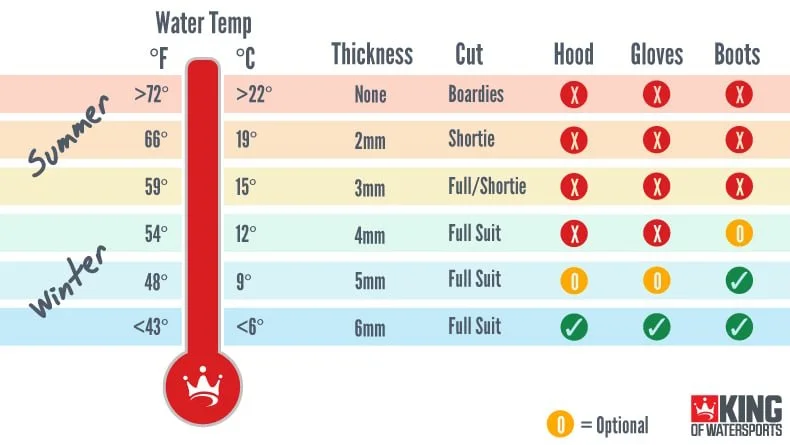
Wetsuit Thickness Guide
3. Seams (Sealed vs Non-Sealed)
This is simple: buy sealed seams!
Sealed seams = glued & stitched → warmer and more comfortable.
Flatlock seams = not sealed → common in surf school suits (cheap, durable) but not ideal for personal use.
4. Zip Options: Back-Zip, Chest-Zip, Zipperless
Back-zip: Easy to get in/out of, good for bigger body types, but prone to flushing.
Chest-zip: Warmer, less flushing, but takes practice to wriggle into.
Zipperless: Like a chest-zip with more shoulder freedom, but less common and usually higher-end.
5. Materials & Linings
As prices rise, wetsuits improve in three main areas:
Neoprene stretch → easier paddling, less fatigue.
Internal linings → fluffy linings dry quicker and feel warmer.
Seam tech → more advanced taping or liquid seams = less cold getting = you stay warmer for longer.
If you’re surfing daily, that quick-dry lining is a lifesaver on frosty mornings. If you only surf occasionally, it’s a luxury, not a necessity.
6. Brands
Just like in any sport, you can find the cheap copies of the equipment.
My advice stick to the well established and trusted brands - Torquay is the birth place for many big brands such as Ripcurl, Billabong, Quicksilver, Roxy, Need essentials. Other notable brands include O’Neill, Vissla, Sisstr, Xcel, Hurley, Peak.
Final Notes
At the very high end, wetsuits split into two categories:
Competitive suits → super stretchy, built for 30-minute heats, short lifespan. Think Formula 1 car: fast, precise, but fragile.
Recreational suits → more durable, built for comfort and longevity. Better value for most surfers.
Bottom line: Head into your local surf shop, try on a few, and pick the one that fits like a glove (without crushing your ribs) and suits your budget. That’s the wetsuit for you.
Still struggling? head down to our friends at Strapper in Torquay and they’ll happily give you a helping hand. And Whilst your down here, come join me for a surf lesson!
What to Expect in Your First Surf Lesson as an Adult (Dawn Surf Edition)
If you’ve been thinking about learning to surf on the Surf Coast — whether you’ve just moved to Torquay, you’re holidaying along the Great Ocean Road, or you’re finally ready to tick it off your bucket list — you might be wondering:
“What actually happens during a surf lesson for adults?”
“Is it too hard?”
“Will I feel out of place?”
“Can I really learn at my age?”
These are some of the most common questions I hear, and they are completely normal. Learning to surf as an adult is exciting, empowering, and absolutely life-changing — but it also comes with a few nerves.
This guide walks you through exactly what to expect from your first adults-only surf lesson with Dawn Surf Co. on the Surf Coast. No surprises, no guesswork — just calm, clear, supportive information so you can step into the ocean with confidence.
The Night Before: Your Lesson Location & Meeting Point
Because I tailor every lesson to the conditions, you’ll receive an email the night before with the confirmed meeting details. This gives me enough time to check:
Swell height
Wind direction & strength
Tide timing
Safety hazards
Best tide windows
Suitable banks
This approach ensures that we choose the safest and most suitable beach for that specific day. Conditions change fast on the Surf Coast — choosing the right spot can mean the difference between a stressful lesson and a beautiful, confidence-building experience.
Meeting Locations
You’ll usually meet me at one of two places:
• Point Addis Beach Lookout
Look for the Dawn Surf Co. flag.
Point Addis offers a peaceful, protected teaching environment and gentle sand-bottom waves.
• The grassy area at Urquharts Bluff
Right in front of the public changing rooms.
Urquharts Bluff is quiet, scenic, and offers consistent, forgiving waves ideal for adults.
Both locations are chosen for their calm atmosphere and distance from crowded town beaches.
Getting Suited Up: Wetsuits, Changing Towels & Comfort
Before your session, you will have filled out a short questionnaire. I use this information to bring a curated selection of wetsuits in your size range.
How a good wetsuit should fit
A wetsuit should feel:
like a glove
snug but not restrictive
warm but flexible
secure with no loose areas
Most people expect a wetsuit to feel “tight,” but once you’re in the water, the snugness helps regulate temperature and gives you a much more enjoyable experience.
Changing Towels for Privacy
Because Point Addis and Urquharts Bluff are quieter beaches without the dedicated change rooms you’ll find in Torquay or Anglesea, I bring changing towels so you can suit up comfortably and modestly if needed.
Safety First: Your Conditions Briefing
Before we even touch the boards, I will walk you through:
The swell forecast
Wind speed and direction
Tide timing
Hazards (if any)
Our plan to mitigate risks
Safe zones and boundaries
How we will communicate in the water
This gives you clarity and confidence before stepping into the ocean.
A lot of adult beginners feel nervous about the unknown. Simply understanding how waves work — and how we will manage them — can eliminate 80% of that stress immediately.
Land-Based Coaching: The Essential Foundations (15–30 Minutes)
Your first 15–30 minutes stay on the sand. This part is crucial — it sets you up for success in the water and dramatically speeds up your progression.
1. Ocean Awareness
We cover:
how waves break
how to choose safe zones
how to avoid other surfers
how to use whitewater safely
how to identify a rip current
how to exit a rip by paddling parallel
This removes fear and replaces it with understanding.
2. Safety Rules
At Dawn Surf Co., adult safety comes first. You’ll learn:
board control
safe falls
spacing
how to keep the board between you and the wave
how to avoid collisions
how to move through incoming waves calmly
Adults tend to appreciate structure — the clearer the rules, the more confident you’ll feel.
3. Technique Breakdown
We cover:
your stance
correct paddling position
efficient paddling technique
pop-up method (step-by-step)
foot placement
weight distribution
The pop-up is taught in a controlled, structured way so you build muscle memory before entering the water.
4. Warm-Up
A gentle warm-up helps loosen muscles and prevent injury.
By the end of the land session, you’ll feel ready — not rushed.
Into the Water: Catching Waves (The Fun Begins)
Once you’re comfortable with the basics, we head straight into the water.
A typical Dawn Surf Co. lesson spends most of the time actually surfing, not standing on the beach waiting.
45 Minutes of Focused Practice
You’ll start by:
learning how to manage whitewater
practising the pop-up
finding your stance
catching waves with instructor help
feeling the timing of the ocean
We take breaks as needed — surfing is physically demanding, and a short breather can dramatically improve your technique.
Short Mid Lesson Break
Around the 45-minute mark, we pause briefly:
water break
slight technique adjustments
more land corrections if needed
Every adult learns differently — small refinements here make a big difference when we head back out.
Second Water Session
We return to the water refreshed and more confident. This is often where things suddenly “click” for students.
In the last 10–15 minutes, you can choose:
more instruction (for progression-focused learners)
photos (for keepsakes or technique review)
Both options are valuable — it’s your lesson, your way.
A Coaching Style That Fits the Student
Everyone learns differently. Some adults want:
constant feedback
detailed breakdowns
step-by-step instruction
Others prefer:
space to try
minimal input
gentle corrections
My coaching adapts to you. There’s no ego, no pressure, and no expectation to perform. You progress at your own pace.
This is the beauty of adults-only lessons — the environment stays calm, focused, and respectful.
Photos: Your Surfing Memories Captured
Photos depend on the conditions:
If conditions are good:
I step out of the water and use a DSLR camera for high-quality images.
If conditions are less ideal:
I photograph you with the GoPro so I can stay close and assist if needed.
What You Get
Photos are delivered via a downloadable link sent by email after the session. These are perfect for:
analysing technique
tracking your progression
sharing the memory
celebrating your first waves
Many adults treasure their first-lesson photos — it’s often the moment surfing becomes real.
Who Comes to Dawn Surf Co?
All types of adults join lessons, including:
new locals wanting to make the most of coastal life
travellers exploring the Great Ocean Road
people ticking surfing off their bucket list
adults returning to the water after years away
The only requirement is the ability to swim 50 metres unassisted in open water.
During lessons, we always stay in areas where you can comfortably stand.
The goal is comfort, not stress.
What If You’re Nervous? (Most Adults Are)
If you're worried about:
ocean depth
looking silly
being too unfit
having bad balance
getting too cold
being “too old”
not standing up
being judged
You’re in the right place. Adults often learn best in environments that feel:
safe
controlled
quiet
respectful
private
That’s why Dawn Surf Co. uses quieter beaches away from the crowds — many adults feel more relaxed knowing they won't be surrounded by kids zig-zagging in every direction or huge classes competing for every wave.
A calm adult mind learns faster.
The End of Your Lesson: Your Next Step
At the end of the session, you’ll have two choices:
1. Leave with a great memory
For many adults, their first lesson is a once-off bucket list moment. You’ll walk away with photos and a huge sense of accomplishment.
2. Begin your surfing journey
If you loved it — and most people do — we’ll chat about your next steps, including:
which beaches to practise on (Cosy Corner, Anglesea, Torquay Back Beach when patrolled)
what skills to focus on
how to stay safe practising alone
when to consider progression lessons
Surfing is a lifelong journey, and your first lesson is just the start.
So… What Can You Expect From Your First Adult Surf Lesson?
You can expect:
the right beach chosen for you
a warm, comfortable wetsuit
a clear safety plan
structured, patient instruction
a calm teaching environment
space to learn without pressure
lots of waves
real progress
photos to remember the experience
a sense of accomplishment
a new connection to the ocean
Your first lesson is designed to make you feel supported, capable, and confident — no matter your age or experience.
Ready to Try Surfing on the Surf Coast?
Book Your Adults-Only Surf Lesson with Dawn Surf Co.
If you're curious, excited, or even a tiny bit nervous — that’s the perfect place to begin.
Whether it’s your first time ever or your first time in years, we’ll guide you through it safely, calmly, and with a clear technique that helps you learn faster.
Ready to give surfing a try? Book your adults-only lesson below — and let’s get you standing up on your first wave.
Am I Too Old to Learn How to Surf? (Absolutely Not — And Here’s Why the Surf Coast Is the Best Place to Start)
By Dawn Surf Co. — Adults-Only Surf Lessons in Torquay & Anglesea
If you’ve ever stood on a clifftop watching clean lines roll into Point Addis or Urquarts Bluff and thought, “I wish I could do that… but maybe I’m too old now,” you’re not alone.
This is one of the most common questions adults ask — and the answer is simple:
No. You are not too old. Not even close.
In fact, adults often learn faster, safer, and with far less frustration than they expect — especially when they’re coached in the right environment.
At Dawn Surf Co., we specialise exclusively in adults-only surf lessons on the Surf Coast, built around calm, patient, technique-focused coaching at two of the region’s most beginner-friendly beaches: Point Addis and Urquarts Bluff.
This blog will help you understand:
Why age is never a barrier
The real fears adults have (and how we solve them)
Why quieter beaches mean faster progress
Why adults learn differently — and better — than kids
And how you can start surfing this season, even with zero experience
Let’s get into it.
You Are Not Too Old — Here’s the Truth About Adult Surfing
Most adults think surfing demands elite fitness, perfect balance, or some mystical ocean intuition you only get if you started at age 7.
None of that is true.
Here’s what you actually need to learn to surf:
A safe beach
A soft board
An instructor who understands adults
Clear technique
Space to practice
Encouragement
That’s it.
You do not need:
Gymnast-level balance
Peak fitness
The flexibility of a teenager
To be fearless
To be “naturally sporty”
The ocean doesn’t care about your age — only your approach.
Adults learn incredibly well when the environment is tailored for them. And that’s exactly where most surf schools fall short.
Why Adults Learn Better With Adults
Most surf schools pack lessons with kids and travellers. The result?
Fast, chaotic, competitive energy
Little personalised coaching
Kids advancing faster (and understandably dominating the waves)
Beginners crammed into tiny takeoff zones
Adults feeling self-conscious or overlooked
This was exactly my experience when I learned to surf as an adult.
I started on chaotic beaches in oversized classes full of kids who picked things up instantly, raced around me, and were… let’s say… energetic.
There was no real progression offered past “stand up once or twice,” and no help building confidence, ocean awareness, or personal technique.
I had to travel all over the world to get proper progression lessons — and even then, many were overcrowded, rushed, or aimed at a younger demographic.
That’s why I created Dawn Surf Co.
A surf school designed for grown adults who want clarity, calm, and real progress — without the chaos.
Why Dawn Surf Co. Is Different
Adults-Only Lessons
No kids. Ever.
This instantly changes the vibe — calmer, more focused, more respectful, and paced for how adults learn best.
Quiet, Beautiful Beaches Away From the Chaos
We teach at:
Point Addis — protected, scenic, with long gentle waves
Urquarts Bluff — sand-bottom, wide, forgiving, never overcrowded
Both beaches are perfect for adults because:
They’re spacious
They have gentle whitewater in all conditions
There’s room to practise without feeling judged or rushed
They avoid the crowds of Torquay and Anglesea town beaches
Patient, Technique-Focused Coaching
Adults don’t want to waste time “just having a go.”
You want clear, simple steps that help you progress — fast.
Our coaching focuses on:
Efficient pop-up techniques
Proper stance
Wave selection for adults
Safe paddling pathways
Building confidence in deeper water
Reading the ocean intelligently
Developing your foundation for green waves down the track
Smaller Class Sizes
Unlike other surf schools that run “come hell or high water,” we cap class sizes and cancel if conditions aren’t safe. Small groups = more feedback, more waves, more progress.
Safety-First (Without the Fear Talk)
We keep it clear and empowering:
Soft boards = soft landings
Water is a forgiving environment
We choose safe, mellow beaches
Our instructors are trained to watch conditions constantly
We carry the right rescue equipment
And if conditions are not safe — your lesson does not run
(Many schools won’t tell you this, but they’ll still run lessons in unsafe conditions.)
Photos Included
Because adults love seeing their real progression (and it helps you refine technique).
Faster Learning, Less Chaos
When you remove:
crowds
kids
chaos
cold shocks
unclear teaching
Adults absolutely thrive.
Common fears adults have — and why they’re not barriers
“I don’t have good balance.”
Perfect — we don’t use balance to teach you. We teach technique.
Standing up on a surfboard is a sequence, not a talent:
Correct board position
Stable paddle
Smooth pop-up technique
Centre of gravity inside the board
Eyes forward and soft knees
Adults often learn this faster because they listen and apply instructions precisely.
“I’m scared of the ocean.”
Totally normal.
But here’s the truth: we teach at gentle, sand-bottom beaches in controlled whitewater.
You’re never thrown into anything intimidating, and we shape the lesson to your comfort level.
“It’s too cold.”
Not with modern wetsuits. We provide high-quality, warm wetsuits designed for Surf Coast temperatures so you can stay comfortable.
“Everyone else will be younger and fitter.”
At Dawn Surf Co.? Nope — everyone is an adult learner, just like you. You’ll see people in their 20s, 30s, 40s, 50s and beyond all progressing together. Age isn’t a disadvantage — it’s your superpower.
Why Point Addis & Urquarts Bluff Are Perfect for Adult Learners
These beaches are:
Spread out
Sand-bottom
Forgiving
Consistent across conditions
Quieter than Torquay front beaches
Ideal for developing confidence
Beginner-friendly even on bigger swell days
When you’re learning as an adult, space and calm matter more than anything. These two beaches give you both — and that’s why we base our teaching there.
Pricing (Transparent and Simple)
Group Lessons: $80 per person
Private Lessons: From $160 (price increases with group size)
Group lessons are great for trying surfing in a supportive environment. Private lessons are perfect if you want rapid progression or personalised coaching.
So… Are You Too Old to Learn How to Surf?
Absolutely not.
Adults learn differently — and when you’re coached in the right environment, you often learn better than kids.
If you want:
a calmer beach
a smaller class
a patient instructor
real technique
space to practise
and lessons made for adults
…then Dawn Surf Co. is the perfect place to start.
Ready to Start Surfing? Let’s Make This the Year You Finally Do.
Book Your Adults-Only Surf Lesson on the Surf Coast
Whether it’s your first time or your first time in years — we’ll teach you how to surf safely, confidently, and with real technique.
Book your lesson now (spots fill fast on weekends)
Based at Point Addis & Urquarts Bluff — away from the chaos of town
Adults-only. Progress-focused. Premium. Empowering.
Let’s get you in the water.
Where’s the Best Beach to Learn to Surf Near Torquay?
A Local Instructor’s Guide for Adult Beginners**
If you’re visiting the Surf Coast — or you’ve recently moved to Torquay or Anglesea — you’ve probably asked the question:
“What’s the best beach to learn to surf around Torquay?”
And as an adults-only surf school that teaches every week across Point Addis, Urquharts Bluff, and the wider Surf Coast, I can tell you this:
There isn’t one “best” beach — there’s the best beach for you, on the right day, with the right conditions, based on your experience and confidence.
This guide breaks down — in simple, reassuring language — the safest and most enjoyable beaches for adult beginners, the beaches to avoid, and how to choose the right spot depending on wind, tide, and swell.
Most importantly, it will help you learn faster and stay safer.
Whether you’re a brand-new local wanting to get the most out of coastal life or a traveller on the Great Ocean Road keen to try surfing for the first time — this guide is your shortcut to choosing the right beach, every time.
Why You Should Trust This Guide
I teach adults exclusively — no kids, no chaos, no crowded mega-classes.
Every week at Dawn Surf Co., I work with:
new locals looking to finally embrace coastal life
adults travelling the Great Ocean Road
people who haven’t been in the ocean in years
people learning how to surf for the very first time
This guide is built from years of teaching adults safely and successfully at two beaches that consistently deliver great sessions:
Point Addis
Urquharts Bluff
But I’ll also explain when you shouldn’t use these beaches — and where beginners should practise on their own instead.
Let’s get into it.
The Best Beaches for Adult Beginners Near Torquay
Below are the safest, most forgiving places to learn to surf — based on protection from wind, wave shape, sand-bottom conditions, and overall accessibility.
1. Point Addis — For Quiet, Controlled Learning (With an Instructor)
Point Addis is one of the most beautiful and peaceful beaches on the Surf Coast, and one of my favourite teaching locations for adults.
Why It’s Excellent for Lessons
Protected from strong winds - The cliffs create natural shelter, meaning cleaner waves and less chop.
Sand bottom - Forgiving, predictable, and beginner-friendly.
Gentle rolling waves - Perfect for popping up on for the first time.
Low crowds - Adults thrive when they’re not fighting for space or feeling watched.
Calm, scenic atmosphere - This matters more than you think, relaxed adults learn 3x faster.
A Crucial Note: It’s Not Patrolled
Point Addis is not patrolled by lifeguards most of the year, which is why I do not recommend practising there alone as a beginner.
During lessons, this isn’t an issue — instructors are trained in:
surf rescue
first aid
risk assessment
and reading subtle changes in conditions
But without that support, it’s best to practise elsewhere.
2. Urquharts Bluff — Calm, Spacious and Perfect for First Timers (In Lessons)
Urquharts Bluff is another favourite teaching beach — quiet, scenic, and beginner-friendly.
Why We Use It
Wide beach with plenty of space to yourself - Ideal for adults who prefer peace over pressure.
Gentle, forgiving waves - Even when swell is present, the wave shape stays soft.
Sand bottom in all directions - Great for safe wipeouts and learning comfortably.
Light crowds - Less noise, fewer kids, less chaos.
Same Warning: Not Patrolled
Similar to Point Addis, it’s not patrolled regularly. Fantastic for lessons — not suitable for solo beginner sessions.
Where Beginners Should Practise Alone
If you’re practising without an instructor, choose beaches with:
lifeguards
large stretches of sand
predictable whitewater
plenty of exit points
close access to help if needed
The best solo-practice beaches are:
Cosy Corner (Torquay)
Small, friendly waves and regular patrols in peak season.
Anglesea Main Beach
Very beginner-friendly, patrolled, and has gentle whitewater.
Torquay Back Beach (during patrolled times)
Excellent rolling waves that suit adults learning to catch whitewater.
These beaches offer:
safer conditions
patrolled zones
smaller whitewater waves
less complex currents
easy access points
consistent beginner-friendly banks
In short: If you’re practising alone, choose a patrolled beach every time.
Beaches Beginners Should Avoid (Until You’re Confident)
Many adults accidentally go straight to the wrong spots.
The biggest mistake?
Heading to Winkipop or Bells Beach.
They are world-class for experienced surfers…
…and absolutely terrible for beginners.
Why to avoid them:
steep takeoffs
heavy waves
strong rips
rocky bottoms
competitive crowds
advanced surfers
If you’re still learning in the whitewater, avoid these beaches until you’ve built confidence and ocean awareness.
Conditions Matter More Than the Beach
One of the biggest reasons beginners struggle is simple:
They don’t check the forecast.
The best beach in the world becomes unsafe if:
swell is too big
tide is too high
wind is too strong
rips are active
there’s no beach left at high tide
Here’s how I choose teaching locations each day.
How an Instructor Chooses the Right Beach
1. Tide (Low Tide Is King for Beginners)
Lower tides mean:
wider beaches
weaker rips
shallower whitewater
more predictable wave patterns
I always aim to schedule lessons around low tide.
It’s safer, calmer, and much easier for adult learners.
2. Wind (Light Northerlies Are Ideal)
The dream forecast:
Light winds under 10 knots
Northerly winds (offshore in this region, giving clean, smooth waves)
Avoid:
strong onshore winds
southerlies that create chop
gusty offshore winds that knock beginners off balance
3. Swell Size (Keep It Under Shoulder-High)
For beginners, ideal swell is:
0–3ft (waist to shoulder high)
Soft, spilling waves
Long whitewater sections
Anything bigger becomes:
harder to paddle
harder to control
more intimidating
more dangerous
If swell exceeds 3ft, I often move the lesson or reschedule entirely.
4. Safety & Rips
Rips are simply water moving back out to sea — not monsters, not whirlpools.
I explain them to adult students calmly:
“If you feel yourself being taken out, don’t fight the water.
Paddle parallel until you reach whitewater — it will carry you back in.”
Understanding this removes fear and builds confidence.
Why Adults Learn Better on Quiet Beaches
Adults learn differently from kids.
You want:
patience
clear technique breakdowns
space to try things
no kids zooming around you
no crowds watching
no chaos
room to fail safely
Quiet beaches like Point Addis and Urquharts Bluff provide:
more waves per person
more attentive coaching
a calmer mindset
faster progression
safer conditions
The environment alone can accelerate your learning dramatically.
What a Dawn Surf Co. Lesson Looks Like
Here’s the structure we follow to give you the best experience:
1. Meet at the Beach & Gear Up
Warm wetsuits, softboards, and a quick check of conditions.
2. Land-Based Coaching
We cover:
ocean awareness
how waves break
safety plan
correct pop-up technique
board control
paddling pathways
This saves you hours of frustration in the water.
3. Into the Water
Always in depth where you can comfortably touch the ground.
We choose the beginner zone carefully based on the tide and banks.
4. Catching Waves — Lots of Them
Small group sizes mean you get:
more waves
more personalised coaching
more chances to practise
more time standing up
5. Technique Adjustments
We refine:
foot placement
stance
weight distribution
timing
paddling technique
6. Photos Included
Perfect for analysing your technique and capturing your progress.
7. Wrap-Up
You leave with:
a clear next step
simple drills you can do alone
safety knowledge
confidence
and usually, a huge grin
Safety: When We Do Not Run Lessons
Lessons are postponed if:
swell exceeds 3ft
tide is too high and there’s no sandbank
strong winds create unsafe conditions
rips are especially active
storms or lightning are present
Your safety comes before everything else.
We won’t run a lesson “come hell or high water” — unlike some larger schools.
So, What’s the Best Beach for You?
For lessons:
Point Addis or Urquharts Bluff — quiet, beautiful, beginner-friendly, and perfect for adult learners with an instructor.
For solo practice:
Cosy Corner, Anglesea Main Beach, or Torquay Back Beach — safe, patrolled, forgiving, and ideal for practising whitewater skills.
With the right beach — and the right guidance — adults progress incredibly fast on the Surf Coast.
Ready to Try Surfing on the Surf Coast?
Book Your Adults-Only Lesson with Dawn Surf Co.
If you’re ready to learn to surf in a calm, supportive, adults-only environment, I’d love to teach you.
Whether you’re a complete first-timer or returning after years away, you’ll learn safely, confidently, and at your own pace.
Book your adults-only surf lesson now
Lessons available at Point Addis & Urquharts Bluff
Perfect for locals and Great Ocean Road travellers
Let’s get you standing up, smiling, and catching waves.
Why Choose our Multi-Pack Lessons Instead of a One-Off Lesson?
It all begins with an idea.
In France, 25% of people live within two hours of the Alps — and that same 25% ski. In Australia, 87% live within two hours of the beach… yet only 10% surf.
If you’ve ever stood on the sand and watched a big group surf lesson unfold, you can understand why. A massive group of beginners crowded into one corner of the shore, instructors rushing to explain the basics, boards flying everywhere. An hour later it’s over — and the students are left with a memory, but not much muscle memory.
That’s exactly why we created our lesson multi-pack in Torquay. Surfing isn’t something you tick off once. It’s a craft, a community, and a connection with the ocean. Here’s why an intensive approach is the perfect way to learn.
1. Real Progression: Learn Faster and Go Further
A small-group one-off lesson gives you a high-quality taste — but multiple lessons with a clear progression gives you transformation.
When you’re in the water every day, each session builds on the last. You start by simply paddling into whitewater, then progress to pop-ups, turning, and wave selection. Your progression compounds — much like language immersion.
At Dawn Surf Co., we design our courses to mirror how surfers really learn: through repetition, feedback, and small wins that add up to big breakthroughs.
2. Sticky Learning: Muscle Memory, Not Just a Memory
Here’s a common story: you smash your first beginner lesson, feel like you’ve cracked it, then come back a year later for an “intermediate” session — and immediately feel out of your depth.
That’s why many of our students begin with a one-off session, then choose to deepen their learning with the next.
A single lesson lights the spark — but repetition turns it into instinct. Surfing isn’t just knowledge, it’s muscle memory, and your body needs multiple days of practice to build it.
Multiple Lessons builds on that spark through daily practice. By day five, you won’t just remember how to surf — your body will know.
3. Safety First: Surfing Deserves More Than a Taster
Large, overcrowded lessons can be unsafe. That’s why our small groups (max 5) give you space and attention — and why our multi-day intensives in Torquay and Anglesea take a slower, safer approach.
We build confidence gradually, ensuring every student understands ocean safety before moving on.
4. The First Lesson Is Just the Beginning
Your first surf lesson feels like discovering a new language — the rush of standing up, the thrill of catching your first wave. But it’s only the start of the story. With every extra session, the ocean opens up more: better timing, smoother paddles, cleaner turns. Each day adds a new chapter, until surfing shifts from being something you tried, to something you are. Whether it’s a single small-group lesson or a full intensive, each session takes you deeper into the rhythm of the sea.
5. Community: Surfing Is More Than Standing on a Board
Surfing is a culture, a community, and a way of life.
Even if you just join us for a single lesson, you’ll get a feel for the culture. But after back to back lessons, you’ll really live it.
You’ll surf where locals surf, eat where locals eat, and learn the unwritten rules that shape line-ups everywhere. The longer you stay, the more you feel part of something.
At Dawn Surf Co., we want you to walk away not only with skills, but also with a sense of belonging — like you’re connected to the coast and its people.
6. A Proven Model: Inspired by European Camps and Ski Schools
If you’ve ever been to a European surf camp or ski school, you’ll know the difference: it’s not about the one lesson. It’s about a course, a community, and a progression plan.
That’s exactly how we’ve designed Dawn Surf Co. — bringing the proven structure of European surf and snow programs to Australia’s Surf Coast. Students learn in small groups, progress daily, and share the experience together.
Like the best ski schools, we give you everything you need — and a few things you didn’t expect — so you can explore surfing confidently between lessons.
The Difference Is in the Depth
A single small-group lesson gives you a taste and a memory. An intensive surf course gives you depth and a foundation.
Whether you join us for a weekend progression or across multiple days, you’ll leave with more than just memories — you’ll leave as a surfer.
The Dawn Surf Co. Story
“The night is darkest just before the dawn.”
—Harvey Dent, The Dark Knight
This line hit home for me—and ended up inspiring the name Dawn Surf Co.
It also happens to be the name of my favourite thing in surfing: the “Dawnie.”
You wake up before sunrise, have your coffee and brekkie, jump in the car, get suited up, and paddle out just as the first light breaks over the ocean.
Then you surf.
One hour? Two? Three?
Wave after wave, with the entire beach to yourself.
You surf until your arms are cooked, your soul is buzzing, and you walk up the beach just as the crowds arrive—wearing a big grin they can’t quite explain. That’s the magic.
From Engineer to Surf Coach
Hi, I’m Henry, I was born to an Aussie mum and a Yorkshire dad, and raised in the most inland town in England. Surfing, to me, was something that happened in a far-off dreamland.
I followed the script:
Studied hard
Went to uni
Got into snowboarding and surfing at uni
Won a few gold medals in snowboarding and got qualified as an instructor
Lifeguarded for 6 years
Landed the “good job”
I worked as an engineer for 10 years, finishing as Lead Durability & Certification Engineer for an automotive consultancy on the Surf Coast. I led a team of 12, testing modified vehicles for the Aussie market. It sounded like a dream job—and for a while, it was.
Meanwhile, on the other side of the world, my dad was beginning his battle with cancer. I left the job to help care for him. Six months later, after his passing, I came back to Torquay.
The Turning Point
I had some savings, so I took time off. I surfed. I studied. I tried to recover from what had been a brutal couple of years.
Then one day, a friend asked me for a surf lesson. That was the moment everything changed.
I loved it. So I got certified—thinking I’d just pick up a few shifts at a local school while I figured out my next move.
But reality hit fast.
I walked into a local surf school and quickly realised something was off. It didn’t align with the return to work I had in mind.
So I did what I do best: ran the numbers, mapped it out, and yes… asked ChatGPT for a second opinion.
And Just Like That… Dawn Surf Co. Was Born
Premium adult surf lessons.
Small classes.
Scenic beaches.
Organised and good vibes.
That’s the vision. And it’s already happening.
Welcome to Dawn Surf Co.
What Makes Dawn Surf Co. Different?
Post 1: What Makes Dawn Surf Co. Different?
Go to the main beach in any surf town during summer and you’ll see the same thing:
A teenage instructor (maybe with an assistant) leading a class of 8 students per coach. They’ll quickly run through safety and pop-up basics, then walk everyone into waist-deep water, push students into waves, yell “Yew!”—and that’s your lesson.
They’ll do that all day, every day, on the same beach—rain, hail, or shine.
Then what happens?
You come back the next day to rent a board and wetsuit, only to find the beach packed with yesterday’s students. It’s chaos—foam boards, screaming kids, flailing arms—and suddenly that magical memory of gliding across your first wave gets swallowed up in frustration… or worse, danger.
There’s a Better Way
That’s where Dawn Surf Co. comes in.
We don’t offer the one-off “Yew and Shaka” lesson. —though yes, you’ll probably shout “Yew!” on day one, and that’s okay.The difference? We don’t stop there.
We don’t pack classes with too many students.
And we don’t teach on the most crowded tourist beach in town.
Why? Because it’s not just bad for learning, boring for us but it’s unsafe.
Surf Lessons, Reimagined
We’ve taken inspiration from European ski schools. At Dawn, your surf journey is treated like a week-long course, not a one-off thrill ride. Here's what you get:
Your own surfboard and wetsuit for the week
A changing towel and secure keysafe for your car keys
A bucket to store your gear
Five progressive surf lessons across five days
Three relaxed, cafe-based theory sessions
Access to quieter, more suitable beaches chosen daily based on conditions
Photos to remember us by, and to share with your followers
And yes, we’ll even introduce you to some of the best local cafés during our theory sessions. We believe Australia’s cafe culture is part of the magic, and we want to share it with you.
Designed to Set You Up for Life
Our goal? To get you catching green waves—not just standing up in the whitewater.
By the end of your week, you’ll walk away with the skills, confidence, and knowledge to continue your surf journey on your own. We’ll even give you a buying guide to help avoid the most common beginner mistakes (because yes, in surfing, the poor man buys twice… or thrice).
This is surf coaching done properly. This is Dawn.
Go to the main beach in any surf town during summer and you’ll see the same thing:
A teenage instructor (maybe with an assistant) leading a class of 8 students per coach. They’ll quickly run through safety and pop-up basics, then walk everyone into waist-deep water, push students into waves, yell “Yew!”—and that’s your lesson.
They’ll do that all day, every day, on the same beach—rain, hail, or shine.
Then what happens?
You come back the next day to rent a board and wetsuit, only to find the beach packed with yesterday’s students. It’s chaos—foam boards, screaming kids, flailing arms—and suddenly that magical memory of gliding across your first wave gets swallowed up in frustration… or worse, danger.
There’s a Better Way
That’s where Dawn Surf Co. comes in.
We do offer the one-off “Yew and Shaka” lesson. The Dawn difference? We don’t stop there.
We don’t pack classes with too many students.
And we don’t teach on the most crowded tourist beach in town.
Why? Because it’s not just bad for learning, boring for us but it’s unsafe.
Surf Lessons, Reimagined
We’ve taken inspiration from European ski schools. At Dawn, your surf journey is treated like a week-long course, not a one-off thrill ride. Here's what you get:
Your own surfboard and wetsuit for the week
A changing towel
A bucket to store your gear
Five progressive surf lessons across five days
Cafe-based theory sessions
Access to quieter, more suitable beaches chosen daily based on conditions
Photos to remember us by, and to share with your followers
And yes, we’ll even introduce you to some of the best local cafés during our theory sessions. We believe Australia’s cafe culture is part of the magic, and we want to share it with you.
Designed to Set You Up for Life
Our goal? To get you catching green waves—not just standing up in the whitewater.
By the end of your week, you’ll walk away with the skills, confidence, and knowledge to continue your surf journey on your own. We’ll even give you a buying guide to help avoid the most common beginner mistakes (because yes, in surfing, the poor man buys twice… or thrice).
This is surf coaching done properly. This is Dawn Surf Co.